What Is a Smart Factory?
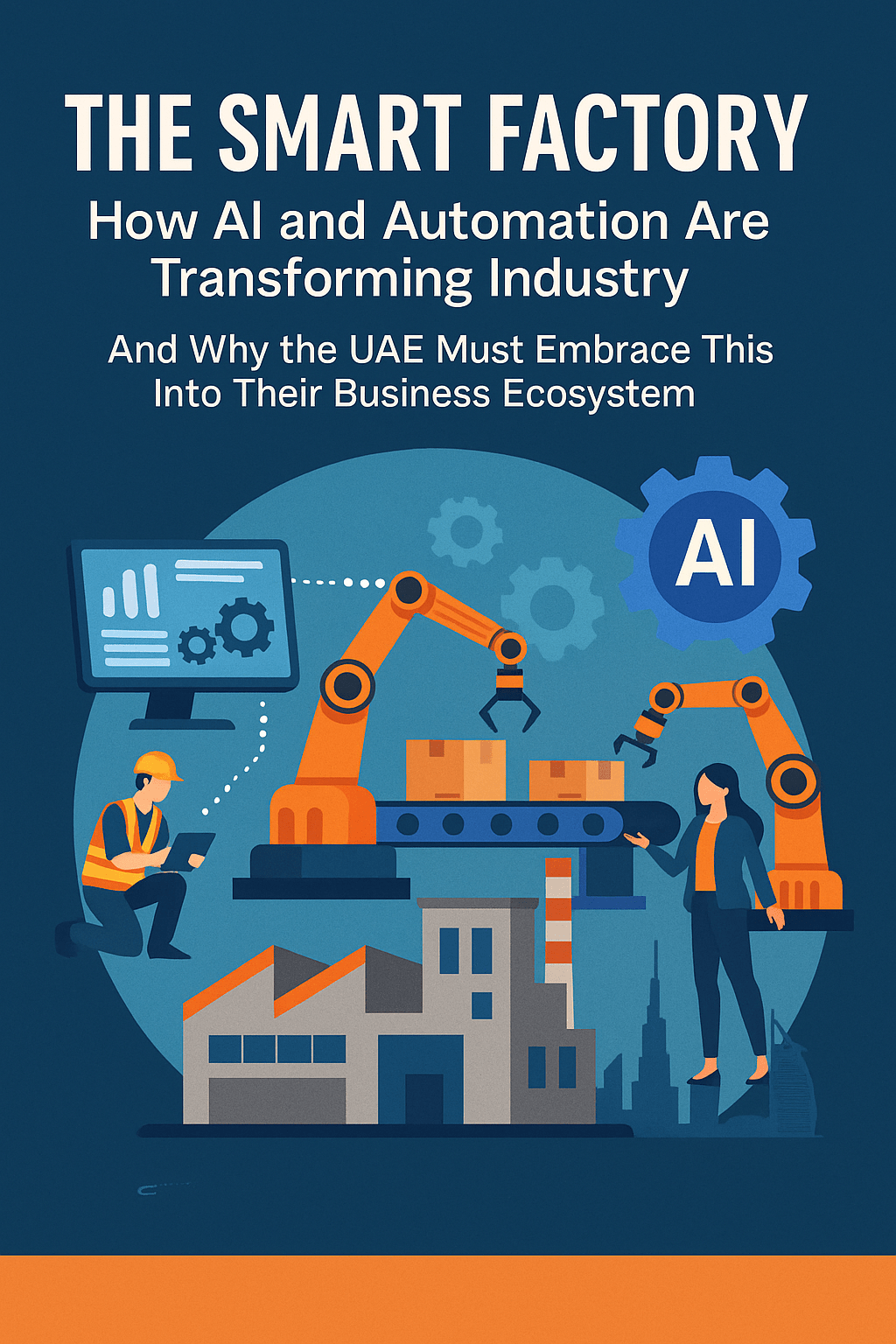
A smart factory is the next evolution of manufacturing. An intelligent, connected, and highly automated production environment powered by technologies such as artificial intelligence (AI), the Internet of Things (IoT), robotics, blockchain, and data analytics.
Unlike traditional factories that rely on manual supervision and isolated machinery, a smart factory uses real-time data to self-optimize performance, predict maintenance needs, and improve efficiency across every stage of production.
In simple terms, a smart factory is like a “living system.” Machines communicate with one another, AI analyzes vast data streams instantly, and automated systems make decisions on the fly — all without human intervention.
How Smart Factories Work
Smart factories operate through a network of sensors, AI systems, and cloud-based platforms that integrate production, logistics, and quality control into one seamless ecosystem.
Here’s how the process works:
Data Collection
IoT sensors and edge devices gather live data from machines, products, and environments (e.g., temperature, vibration, supply levels).
AI Analysis
AI models process that data in real time, identifying inefficiencies, predicting failures, and recommending process adjustments.
Automation
Robots, drones, or smart machines execute those adjustments automatically, reducing downtime and waste.
Blockchain Integration
Every material or product movement can be recorded immutably on blockchain for transparency and traceability.
Continuous Optimisation
Machine learning models continually evolve, enhancing production efficiency over time.
The result is a factory that’s self-aware, self-correcting, and self-optimizing. Capable of running 24/7 with minimal human oversight.
Why Smart Factories Are Necessary
In today’s hyper-competitive, data-driven economy, the traditional factory model is no longer sustainable.
Manufacturers face pressure to deliver faster, cheaper, and greener, all while maintaining high quality and resilience. Smart factories address these challenges directly by providing:
Increased Efficiency
AI-driven automation eliminates bottlenecks, maximizing throughput and reducing waste.
Predictive Maintenance
Sensors detect potential failures before they happen, preventing costly downtime.
Sustainability
Smart systems monitor energy use and emissions, optimizing for environmental performance.
Customization at Scale
Real-time data enables flexible production, allowing factories to adapt instantly to new product designs or market trends.
Global Competitiveness
Nations that adopt smart manufacturing early gain a major advantage in exports, innovation, and job creation.
Simply put, smart factories aren’t a luxury. They’re the foundation of Industry 4.0, the fourth industrial revolution transforming global manufacturing.
The Role of Artificial Intelligence in Smart Factories
AI is the brain behind the smart factory.
It processes the massive amounts of data generated by machines, sensors, and supply chains, turning information into actionable intelligence.
Here’s how AI transforms operations:
Predictive Analytics
AI forecasts equipment failures and automatically schedules maintenance.
Computer Vision
Cameras powered by AI detect defects in real time, ensuring near-perfect quality control.
Autonomous Decision-Making
AI agents manage inventory, optimize production schedules, and handle logistics autonomously.
Energy Management
Smart algorithms analyze energy consumption to minimize costs and reduce environmental impact.
By combining AI with robotics, smart factories create cyber-physical systems. Where digital intelligence and physical operations merge into one cohesive ecosystem.
Why the UAE Must Embrace Smart Factories
The UAE has already positioned itself as a global leader in innovation, with bold strategies like UAE Vision 2031, Operation 300bn, and the UAE AI Strategy 2031. Integrating smart factories into this vision is the next critical step.
Economic Diversification
As the UAE continues to diversify beyond oil, smart manufacturing offers a pathway to sustainable, high-value industrial growth. Particularly in aerospace, automotive, energy, and advanced materials.
Boosting Productivity & Competitiveness
AI-enabled factories can drastically reduce production costs, improve efficiency, and attract foreign direct investment (FDI). This supports Dubai’s D33 Economic Agenda, which aims to double the economy by 2033.
Empowering Local Talent
By developing AI and automation skills domestically, the UAE can build a new generation of engineers, data scientists, and technicians, equipping its workforce for the future economy.
Sustainability Alignment
Smart factories align perfectly with the UAE’s Net Zero 2050 goals by cutting energy consumption and enabling low-carbon production through intelligent resource management.
Global Trade & Logistics Integration
Dubai’s world-class logistics and free zone infrastructure make it an ideal base for AI-driven industrial exports. Integrating smart factories with blockchain trade finance and digital supply chain platforms can further strengthen the UAE’s global position.
What is the Future of Manufacturing in the UAE?
The UAE stands on the threshold of a new industrial revolution, one defined by intelligence, sustainability, and speed.
By embracing AI-powered smart factories, the nation can build a competitive, resilient, and future-ready manufacturing sector that complements its leadership in AI, fintech, and renewable energy.
From Dubai Industrial City to Abu Dhabi’s Khalifa Industrial Zone, the groundwork for smart manufacturing is already in place. The next step is collaboration between the government, private sector, and academia to integrate AI, blockchain, and IoT into every layer of production.
As the world transitions to an intelligent economy, the UAE has the opportunity and the vision to become the global capital of smart manufacturing and industrial innovation.