The United Arab Emirates has rapidly established itself as one of the world’s leading hubs for blockchain, artificial intelligence (AI), and digital innovation. As part of its long-term economic vision under the Dubai Economic Agenda (D33) and UAE AI Strategy 2031, the nation is strategically integrating cutting-edge technologies to power its transition toward a diversified, tech-driven economy.
Among the most transformative technologies reshaping the global financial and industrial landscape are Real-World Asset (RWA) tokenization and Artificial Intelligence (AI).
Individually, each is already redefining the way assets are owned, traded, and managed. But when combined, they form a powerful technological ecosystem that enhances transparency, efficiency, and intelligence across finance, real estate, and infrastructure, aligning perfectly with the UAE’s innovation-driven vision.
What Are Real-World Assets (RWAs)?
In simple terms, Real-World Assets (RWAs) are traditional physical or financial assets. Such as real estate, commodities, bonds, or infrastructure projects, that are digitally represented as tokens on a blockchain.
These tokens act as digital certificates of ownership, allowing investors to buy, sell, or trade fractional shares of an asset with complete transparency and security. For example, a AED 600 million Dubai office tower could be divided into millions of digital tokens, each representing a fraction of ownership.
This model unlocks major advantages for both investors and asset owners. It allows for fractional ownership, giving smaller investors access to premium assets; global accessibility, enabling participation from anywhere; and liquidity, as tokens can be traded on digital marketplaces, a breakthrough for traditionally illiquid markets like real estate.
What Role Does AI Play in Tokenized Markets?
Artificial Intelligence (AI) brings the analytical and predictive power that fuels smarter decision-making in tokenized ecosystems. AI and machine learning (ML) models process vast datasets, from market trends to property valuations, providing insights that improve pricing, risk management, and operational efficiency.
AI can detect fraud, identify trading anomalies, automate compliance checks, and even forecast market demand or rental yields. In tokenized systems, it acts as the intelligent layer that ensures data-driven accuracy, fairness, and optimization.
For the UAE, where AI has already been woven into public governance, healthcare, and logistics, its integration with tokenized finance represents the next leap forward. This is aimed at moving toward an autonomous, data-driven economy.
How RWA and AI Work Together: Smarter Asset Valuation and Risk Analysis
AI can analyse real-time market data. From real estate prices to energy production, it can calculate precise valuations and risk scores for each tokenized asset. In Dubai’s emerging real estate tokenization platforms, such as Prypco Mint (powered by the Dubai Land Department), AI could forecast demand trends across districts like Downtown, Marina, or Business Bay, providing developers and investors with actionable market intelligence.
Automated Compliance and Fraud Prevention
AI systems monitor transactions to detect suspicious activity and ensure compliance with UAE’s regulatory frameworks, including VARA (Dubai) and ADGM (Abu Dhabi). For instance, AI can automatically validate whether tokenized Sukuk bonds meet Sharia standards or alert administrators to potential regulatory violations before transactions are executed.
AI-Powered Investor Insights
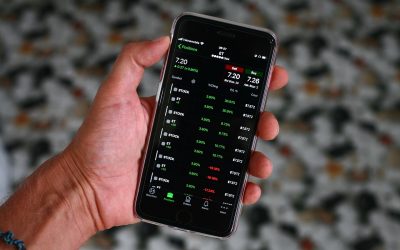
In tokenized ecosystems, AI can transform complex data into intuitive insights for investors. Imagine an AI dashboard that analyses portfolio performance, highlights trending assets, and issues personalised recommendations, all in real time. This makes investing in RWAs as seamless and transparent as trading stocks on a modern exchange.
Predictive Yield and Market Forecasting
RWAs often generate ongoing returns, such as rental income, dividends, or yield-bearing profits. AI can model future cashflows, simulate market conditions, and alert investors to expected yield fluctuations. A predictive AI system might, for example, project that a tokenized Dubai office tower will yield 8% annually over the next three years based on regional economic and rental data.
Integration with Smart Cities and DePIN Networks
When combined with Decentralized Physical Infrastructure Networks (DePIN), tokenized assets can fuel smart city ecosystems. Imagine AI-optimized solar farms, EV charging networks, or smart grid systems where every token represents ownership in physical infrastructure. AI would manage energy efficiency, forecast maintenance, and automatically distribute rewards to token holders, creating a circular, self-sustaining economy.
Why This Combination Matters for the UAE
The UAE’s vision for the future aligns perfectly with this convergence of RWA and AI. As a nation that thrives on forward-thinking regulation, it offers one of the most conducive environments for innovation.
Entities like VARA, ADGM, and the Dubai Land Department (DLD) are actively shaping frameworks for blockchain adoption and tokenized investment. Simultaneously, AI initiatives, from Abu Dhabi’s AI71 to Dubai’s Smart City Strategy, are transforming how data is used to power public services and private enterprise.
This dual commitment to tokenization and intelligence allows the UAE to position itself not only as a regional innovation hub, but also as a global testbed for AI-driven digital economies.
Potential UAE Use Cases for RWA + AI
In real estate, tokenized skyscrapers could distribute profits automatically, with AI forecasting rent demand and market fluctuations.
In energy, solar farms and renewable grids could be tokenized, with AI optimising output and predicting power usage.
In finance, tokenized Sukuk bonds could benefit from AI-driven yield predictions and automated Sharia compliance.
In luxury and commodities, Dubai’s gold and jewellery markets could use AI to authenticate tokenized assets in real time.
In logistics, tokenized shipping and warehouse assets could leverage AI for predictive tracking and global trade efficiency.
Each of these sectors aligns with the UAE’s national objectives for sustainability, efficiency, and
global competitiveness.
Challenges and the Path Ahead
The fusion of RWA and AI still faces hurdles that need to be addressed before widespread adoption.
Data privacy and cybersecurity remain top concerns, as AI systems require access to sensitive datasets. Regulatory clarity must evolve further to define how AI-enhanced token systems are monitored and governed. And investor education is essential to build confidence in this emerging asset class.
By tackling these challenges through strong regulation, public-private collaboration, and robust infrastructure – all areas where the UAE already excels- the nation can continue to lead the world in responsible digital innovation.
Our thoughts
The integration of RWA tokenization and AI represents the next phase of the UAE’s economic evolution. One where financial markets become smarter, more transparent, and more accessible.
For developers, institutions, and investors, this synergy unlocks faster access to capital, real-time data intelligence, and new opportunities for global participation.
As the UAE continues to merge blockchain transparency with AI intelligence, it is not merely adopting emerging technologies. It is building the infrastructure of tomorrow’s economy, one that combines digital efficiency with human insight and trust.