
What is RWA Tokenization in Hospitality?
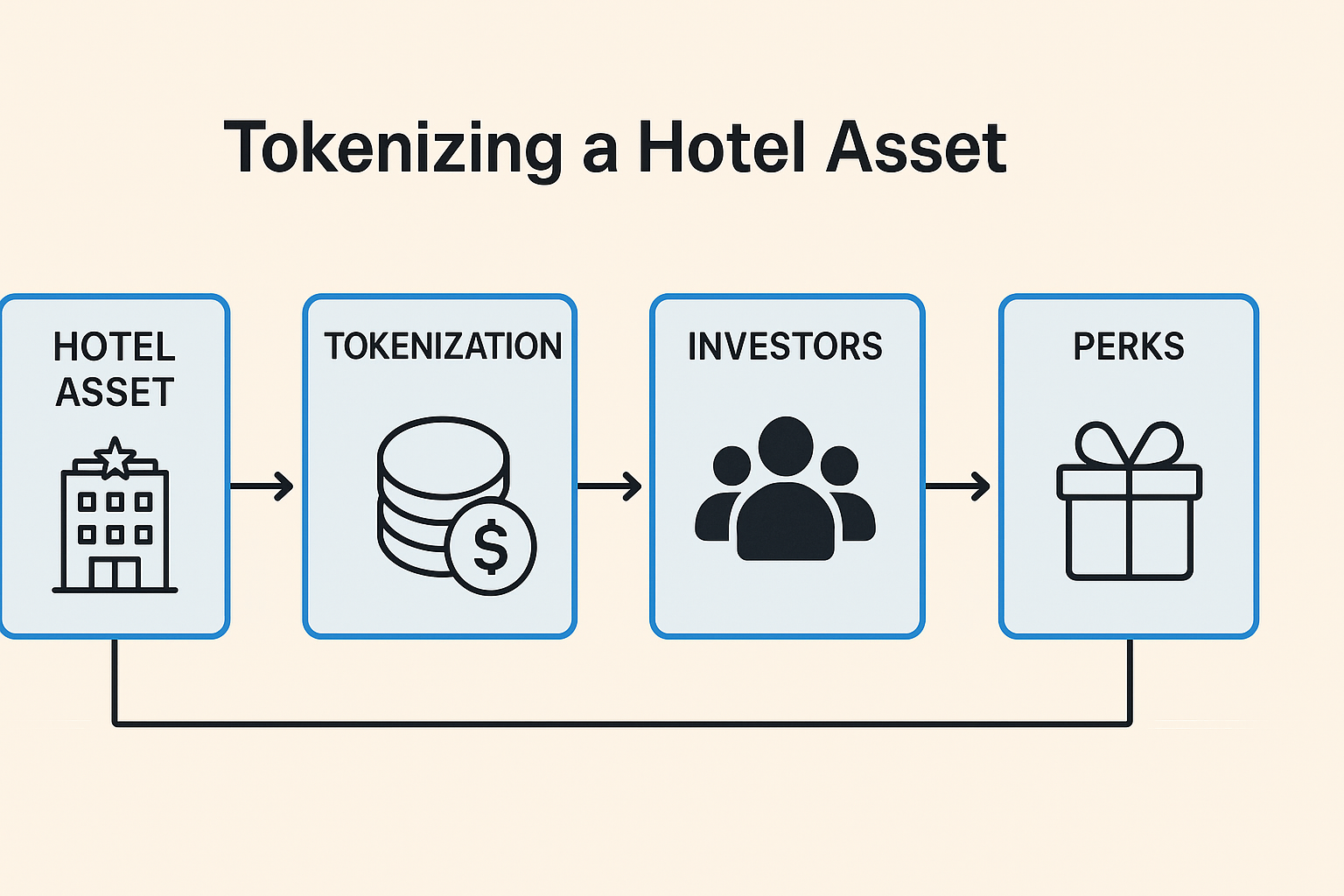
RWA tokenization involves converting a tangible asset, such as a hotel building or resort, into digital tokens on the blockchain. Each token may represent a fraction of ownership, rights to revenue or access privileges. These tokens can then be traded globally, much like shares of a company, but with the added benefits of blockchain efficiency, transparency and accessibility.
How It Works for a Hotel Chain
In practice, a hotel chain might place a property into a legal structure, commonly a special purpose vehicle (SPV). The SPV issues tokens on a blockchain, each representing fractional ownership of the hotel’s revenue streams or equity. Investors, whether local or global, can buy tokens with relatively modest capital compared to traditional hotel investment minimums. Income from room bookings, food & beverage operations or events can be distributed automatically to token holders via smart contracts. Unlike many real estate investments, token holders enjoy a potential secondary-market liquidity since these tokens can trade on regulated platforms. To deepen engagement, hotels may bundle token ownership with utility perks, premium loyalty access, free stays or exclusive event invitations.
Benefits for Hotel Chains
For hotel groups, this model introduces new ways to raise capital. Tokenization opens projects to a global pool of investors, reducing reliance on large institutional financiers or traditional bank debt. Real estate and hospitality are traditionally illiquid; RWA tokens change that dynamic by allowing fractional ownership to be bought and sold. A broader investor base, from institutional actors to retail participants, means more flexibility. The blockchain ledger underpins transparency and trust: ownership and transactions become immutable records. For hospitality brands, linking token ownership with loyalty and guest experience can elevate brand engagement and customer lifetime value.
Use-Case Example: A UAE Hotel Chain
Imagine a luxury hotel group in Dubai planning a new beachfront resort. Instead of seeking all funds through a bank loan, the project is fractionalized into one million tokens priced at one hundred dollars each. Global participants purchase tokens, raising one hundred million dollars in capital. When the resort opens, thirty per cent of net profits are distributed quarterly to token holders. Additionally, token holders receive perks, room upgrades or discounts, creating a deeper bond between investor and guest.
Challenges & Considerations
Despite the promise, tokenization demands attention to regulatory environments: in Dubai, the Virtual Assets Regulatory Authority (VARA) oversees virtual-asset frameworks, and hotels must coordinate with real-estate laws. Custody and clear legal rights are essential to ensure tokens truly represent ownership or revenue rights. Market education is critical: both guests and investors need clarity about tokenized assets and their benefits. Secondary-market liquidity remains an issue, and token values may fluctuate and depend on adoption.
Why the UAE Is Ideal for RWA Hotels
The UAE already leads in real-estate tokenisation pilots via bodies such as the Dubai Land Department. Hospitality remains central to the economy. Dubai alone welcomed millions of international visitors in 2023, per the Dubai Tourism report. Regulatory clarity in jurisdictions such as Abu Dhabi Global Market (ADGM) and Dubai International Financial Centre (DIFC), along with a strong blockchain initiative ecosystem, make the UAE a fertile environment for tokenized hotels.
Our Thoughts
RWA tokenization is poised to transform hotel chains in the UAE into more inclusive, efficient and innovative business models. By leveraging blockchain, hotels can attract global investors, streamline financing and create unique guest experiences that merge investment with loyalty. With the UAE committed to its Web3 roadmap and tokenisation strategy, tokenized hotels may emerge as a defining frontier in hospitality, blending the strength of real estate with the flexibility of digital assets.