
Smart Citizen Services
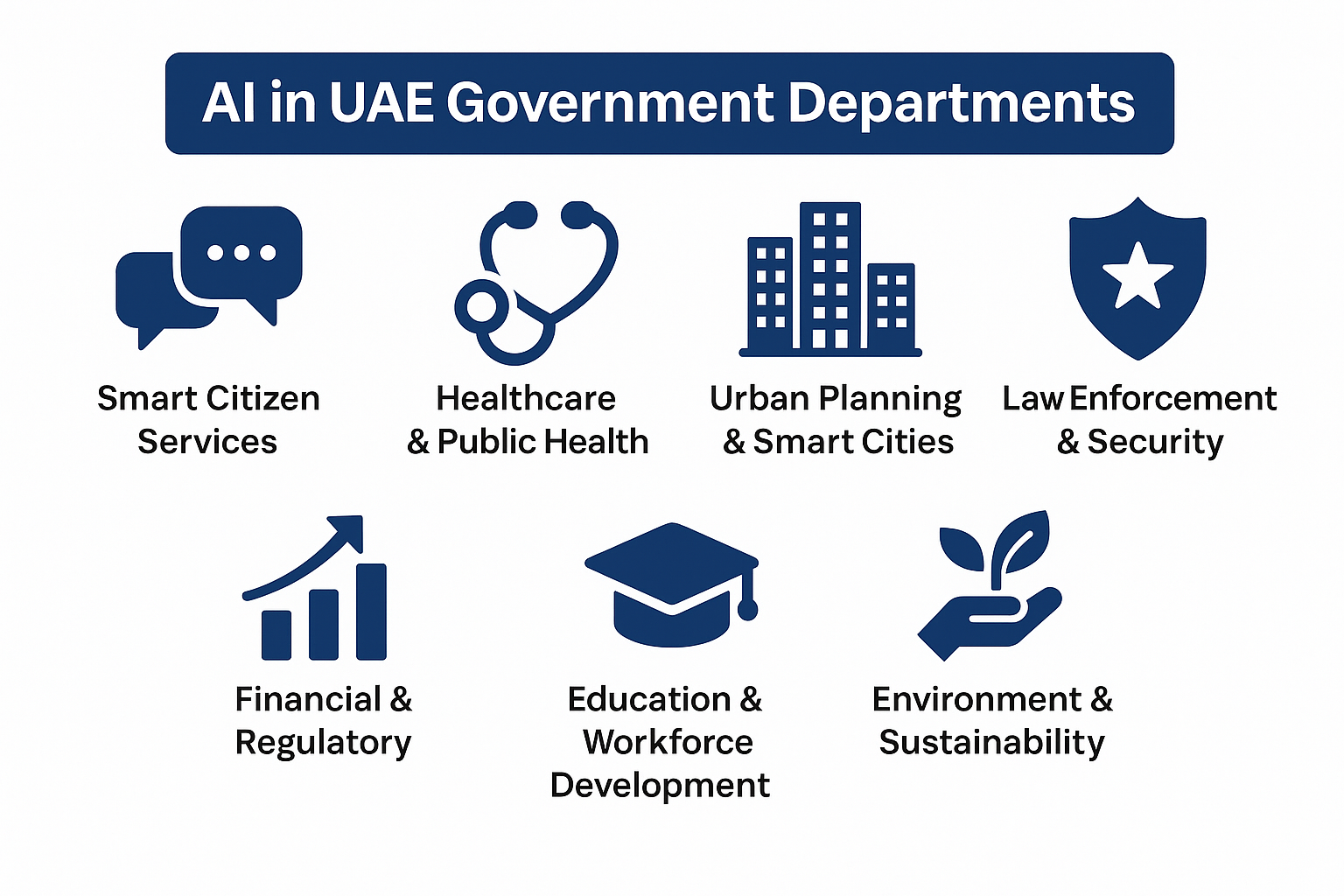
In an era where citizens expect fast, seamless service, government departments face the challenge of handling vast volumes of applications, from visa requests to business licences. AI-powered natural-language processing (NLP) systems can automate form processing and approvals, while multilingual chatbots operating around the clock can handle queries in Arabic, English, Hindi and more. Machine-learning models can even predict common citizen needs and proactively recommend relevant services. The result is reduced turnaround times, fewer errors and a markedly improved citizen satisfaction.
AI for Healthcare and Public Health Departments
Governmental health departments in the UAE are leveraging AI and machine learning to enhance outcomes and resilience. Predictive analytics detect potential disease outbreaks early, while AI-assisted diagnostic tools support public clinics and hospitals run by the government. Real-time resource optimisation ensures that medical staff, beds and equipment are allocated efficiently across facilities. These capabilities amplify the impact of public-health systems and align with the UAE’s push for smarter, more prepared governance.
Urban Planning and Smart Cities
Urban infrastructure and planning are complex tasks, especially in rapidly developing cities like Dubai and Abu Dhabi. Machine-learning models ingest traffic data to optimise road networks and reduce congestion. Integration of Internet-of-Things (IoT) sensors with AI-powered smart energy grids, water systems and waste-management networks. Predictive modelling anticipates migration trends and population growth, enabling departments to plan expansion with precision. These data-driven techniques support the UAE’s broader smart-city ambitions and promote more sustainable urban environments.
Law Enforcement and Security
Safety remains a cornerstone of UAE governance, and AI enhances it in multiple dimensions. Facial recognition and biometric systems support border control and public safety operations. Predictive policing tools analyse patterns of crime or incident reports to help prevent occurrences. Cybersecurity frameworks embedded with AI monitor and neutralise threats targeting government infrastructure. Together, these technologies enhance responsiveness, reinforce public trust and elevate the reliability of governmental security services.
Financial and Regulatory Departments
Governmental finance, taxation and regulatory bodies are under increasing pressure to manage large volumes of data, detect fraud and regulate effectively. Machine-learning algorithms automate fraud detection, especially in banking and tax systems. Meanwhile, AI enhances budget forecasting and monitors spending patterns for improved efficiency. With the UAE already piloting blockchain solutions in government services, AI complements these by analysing risk, reinforcing compliance and boosting transparency.
Education and Workforce Development
AI has a role in shaping the workforce of tomorrow. Within education departments and training authorities, AI can personalise e-learning platforms so students learn at their own pace. Machine-learning systems forecast future workforce demands and help align training programs accordingly. In administrative terms, AI can automate grading, admissions and curriculum planning, letting educators focus on the human side of teaching. These capabilities help ensure that the UAE’s youth are equipped for the AI economy.
Environmental and Sustainability Departments
The UAE is pursuing ambitious sustainability goals, including Net Zero targets, and AI is a key enabler in that journey. Advanced climate-modelling tools help forecast environmental risks. AI-driven sensor networks monitor air quality, desertification and marine ecosystems. Machine-learning algorithms optimise renewable-energy grids such as solar and wind farms. These applications strengthen environmental governance and align departmental actions with national sustainability objectives.
Challenges and Considerations
While AI and machine learning present vast opportunities for UAE governmental departments, successful integration requires attention to several critical factors. First, robust data infrastructure is essential: secure, standardised and interoperable data systems form the foundation of AI-powered services. Second, ethics and transparency remain paramount, especially where AI decisions affect citizens in areas such as security or social services. Finally, talent development is necessary: government workforces must be upskilled so that AI tools are effectively implemented and managed.
Our Thoughts
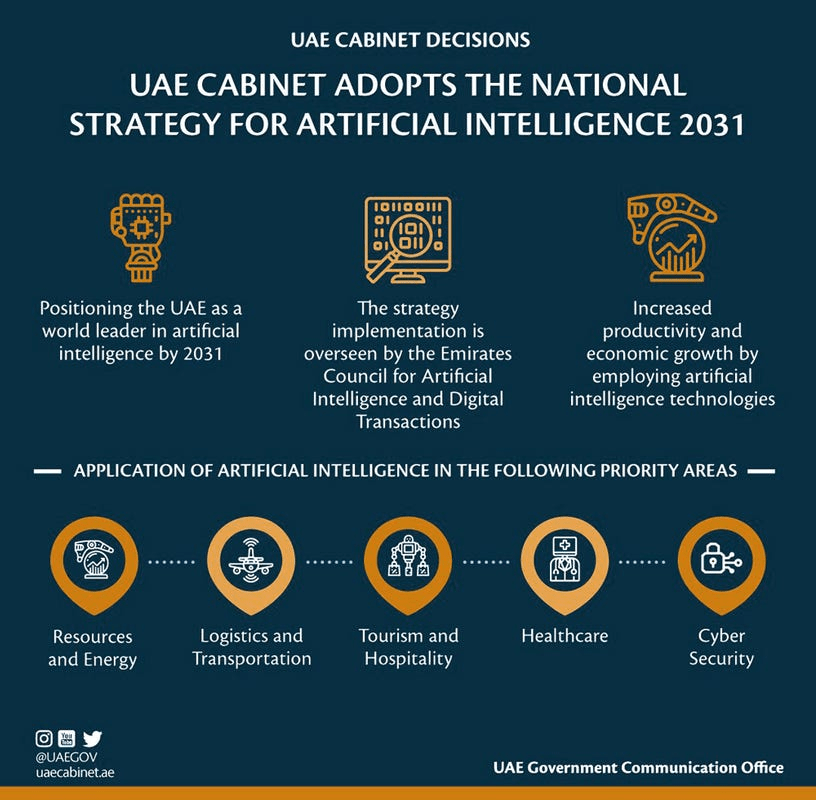
Artificial intelligence and machine learning are not just tools for efficiency; they are enablers of transformational governance. For the UAE, they represent a cornerstone of its ambition to lead globally in smart governance, innovation and sustainable development. From smart citizen services to AI-powered urban planning and healthcare, UAE government departments have a unique opportunity to showcase how digital-first governance can improve lives and foster long-term economic growth. The proactive embrace of AI, supported by strong leadership and investment, positions the UAE not just as a regional leader but as a global benchmark for the future of government in the AI age.