
Smarter Planning and Project Delivery for Developers
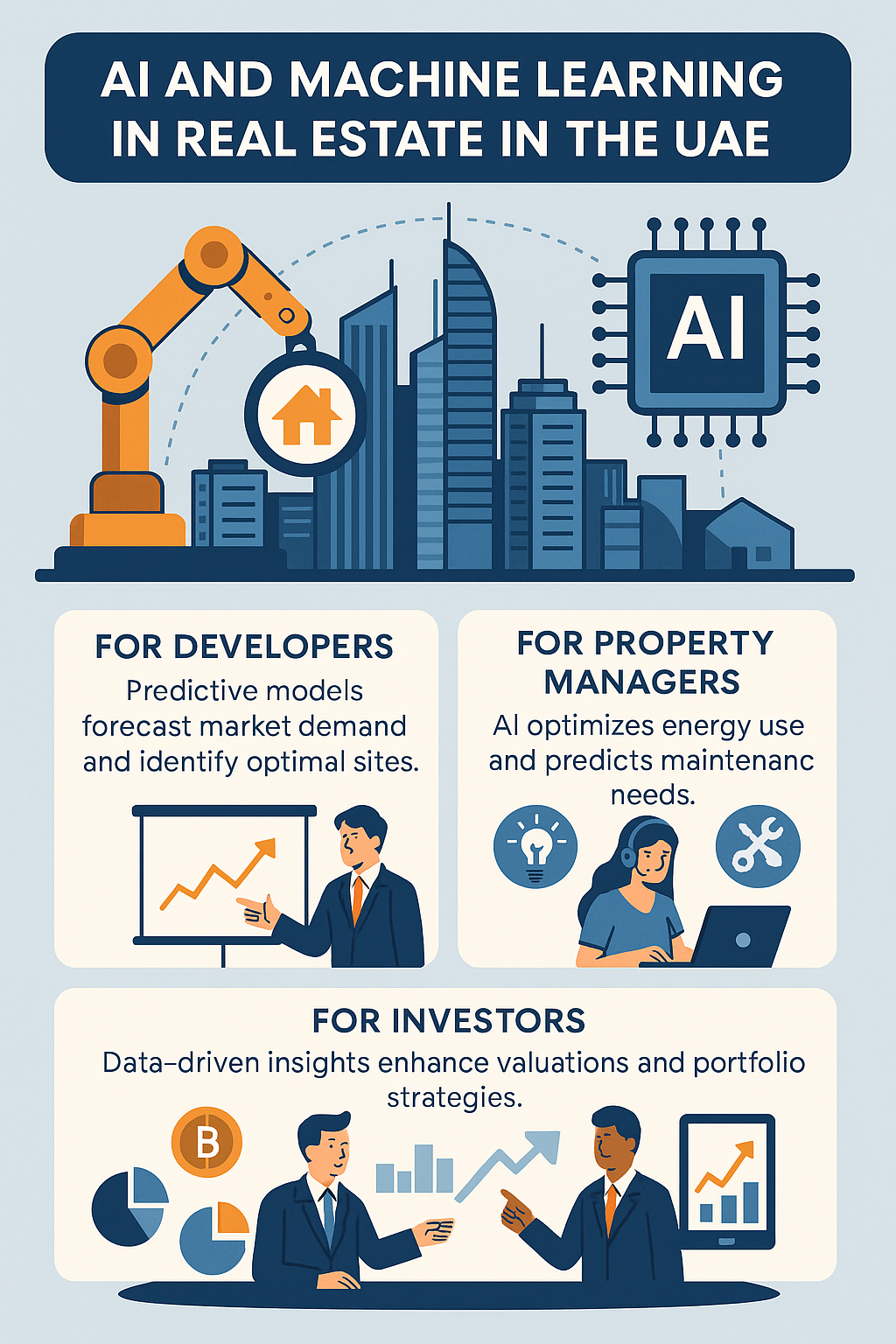
For developers, AI is fast becoming an indispensable tool for smarter decision-making, long before construction begins. Predictive AI models analyse population growth, job trends, tourism patterns, and investment flows to determine which property types, residential, commercial, or mixed-use, will be most in demand. This helps developers avoid costly oversupply and align projects with real-time market needs.
Machine learning algorithms are also transforming site selection. By analysing variables such as land prices, infrastructure access, environmental factors, and zoning regulations, AI can pinpoint the most profitable plots for development. AI-driven design platforms then go further, optimising layouts for natural light, ventilation, and energy efficiency.
On construction sites, AI-powered robotics and predictive maintenance systems help keep projects on schedule. Algorithms can track inventory, manage logistics, and identify equipment issues before they cause delays. For example, a UAE developer could use AI to forecast demand for mid-range apartments near upcoming transport links, reducing exposure to luxury oversupply and improving return on investment.
Intelligent Operations and Tenant Experience for Property Managers
Managing the UAE’s extensive real estate portfolio, spanning malls, towers, residential communities, and mixed-use developments, requires precision, and AI makes that possible. Smart sensors combined with AI algorithms optimise electricity, water, and air-conditioning usage, reducing costs and supporting Dubai’s green building initiatives.
Predictive maintenance powered by ML helps detect faults in elevators, HVAC systems, or plumbing before they fail, cutting emergency repair costs and boosting tenant satisfaction. AI also enhances the tenant experience through virtual assistants and chatbots that manage maintenance requests, lease renewals, and rent payments around the clock.
Beyond maintenance, AI provides deeper insight into tenant behaviour. It can analyse foot traffic in retail spaces or occupancy rates in residential towers, enabling managers to adjust layouts, optimise rent levels, and tailor amenities to demand. The result is a smoother, more personalised experience for residents and businesses alike.
Data-Driven Insights and Portfolio Optimisation for Investors
For investors, AI is reshaping the way real estate portfolios are built, valued, and managed. Traditional valuation models often rely on lagging indicators, but AI integrates real-time market data. From property transactions and rental yields to macroeconomic trends, it produces more accurate and dynamic valuations.
Machine learning systems also assess risk by scanning global news, regulatory updates, and social sentiment, helping investors anticipate market shifts or potential downturns. At the portfolio level, AI can recommend diversification strategies across asset classes. Such as REITs, affordable housing, or tokenized properties, based on investor preferences and market volatility.
In the UAE, where tokenized real estate is becoming increasingly popular, AI plays a vital role in analysing liquidity, yield potential, and risk of these digital assets. For example, an investor could use AI to scan all tokenized Dubai Marina apartments, identify undervalued properties, and model post-renovation returns with a level of speed and accuracy unattainable by manual analysis.
Why AI in Real Estate Matters for the UAE
The UAE’s property market operates at the intersection of global capital, rapid innovation, and strong regulation. This makes it an ideal environment for AI adoption. AI-powered analytics make real estate more transparent for international investors, easing cross-border transactions. Compliance systems enhanced by AI also help developers and property managers meet Dubai Land Department (DLD) and Virtual Assets Regulatory Authority (VARA) standards.
Perhaps most importantly, AI aligns perfectly with the UAE’s sustainability goals. From optimising energy use to minimising waste in construction, AI-driven systems are crucial to achieving the UAE’s Net Zero 2050 ambitions. When combined with blockchain and RWA tokenization, AI enables fractional ownership and liquidity for property investments, attracting digital-native investors and global capital alike.
Challenges and Considerations
Despite its promise, integrating AI into real estate is not without challenges. Protecting sensitive tenant and investor data must remain a top priority under UAE privacy laws. Smaller developers may face initial barriers due to high implementation costs, though scalable AI-as-a-service solutions are beginning to close this gap. Finally, while the UAE leads in regulatory frameworks for digital assets and tokenized property, continued global coordination will be essential to ensure full cross-border interoperability.
Our Thoughts
AI and machine learning are no longer optional tools; they are now central to the UAE’s real estate evolution. For developers, AI offers smarter forecasting and efficient construction. For managers, it delivers operational intelligence and predictive maintenance. For investors, it unlocks global reach, transparency, and data-driven performance.
As Dubai and Abu Dhabi expand their digital economies, the convergence of AI, blockchain, and real estate will define the next generation of property investment. The UAE’s forward-thinking leadership, world-class infrastructure, and openness to innovation make it the perfect proving ground for the world’s first truly intelligent real estate ecosystem.