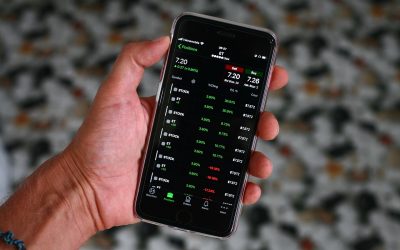

From sovereign wealth funds to venture capital firms, asset managers across the UAE are using AI to analyse markets, forecast trends, and make faster, more informed investment decisions. This shift is redefining not just how portfolios are managed, but also what financial performance looks like in an era driven by data and automation.
Smarter Portfolio Management and Predictive Intelligence
In traditional investing, portfolio managers rely on historical data, human analysis, and manual decision-making. AI changes that completely. Machine learning models can now process billions of data points, from global market indicators and commodity flows to satellite images and social sentiment, to identify patterns invisible to the human eye.
For instance, an AI system can analyse global shipping data and weather patterns to forecast oil demand, helping UAE funds with heavy energy exposure adjust positions proactively. This real-time intelligence empowers fund managers to rebalance portfolios dynamically, reducing exposure to volatility while maximising opportunities.
Enhanced Risk Management and Market Resilience
AI is transforming risk management from a reactive to a predictive approach. Instead of static models that assume stable conditions, machine learning systems continuously update themselves as new market data emerges. Techniques such as anomaly detection, stress testing, and predictive volatility modelling enable funds to anticipate potential losses before they occur.
For UAE funds operating in fast-moving markets, whether equities, real estate, or commodities, this adaptability is invaluable. AI not only identifies risk but quantifies it in real-time, offering a clearer, more actionable view of exposure across asset classes.
Alternative Data and Smarter Insights
One of AI’s biggest advantages lies in its ability to incorporate alternative data. Traditional financial models focus on prices, earnings, and macro indicators. AI goes further by analysing everything from social media sentiment and news feeds to Google search trends and ESG metrics.
Imagine a UAE-based fund using AI to track online discussions about electric vehicles, predicting shifts in global demand for battery metals before quarterly results are even announced. These insights offer a powerful edge in sectors tied to innovation and sustainability, aligning well with the UAE’s diversification goals under Vision 2031.
Algorithmic Trading and Quantitative Strategies
AI-driven trading systems are already becoming standard in global finance, and the UAE is following suit. Algorithmic trading models can execute thousands of transactions per second, reacting to market conditions in real-time. Quant funds operating within the Dubai International Financial Centre (DIFC) and Abu Dhabi Global Market (ADGM) now leverage these models to capture micro-opportunities across forex, commodities, and even digital assets.
This precision-based approach enhances efficiency and liquidity, giving UAE funds a competitive edge in attracting international capital.
How UAE Funds Are Using AI Across Sectors
The UAE’s sovereign wealth funds, such as ADIA and Mubadala, are leading adopters of AI, using advanced analytics to refine asset allocation, assess geopolitical risks, and strengthen long-term global strategies. Private equity and venture capital firms are integrating AI to evaluate startups more effectively, analysing business models, patents, and team performance to identify winners earlier.
In real estate and infrastructure, AI-driven proptech is transforming valuation and portfolio management by analysing rental data, urban expansion, and IoT sensor inputs. Even Sharia-compliant funds are using AI to streamline asset screening and ensure every investment adheres to Islamic finance principles.
The Benefits for the UAE’s Financial Ecosystem
AI and ML adoption in investment funds brings multiple advantages: greater efficiency, deeper market insight, and stronger competitiveness. Automating repetitive analytical tasks allows fund managers to focus on high-level strategy. Predictive analytics enhances decision-making, while data transparency builds investor confidence.
This shift aligns perfectly with national priorities, including the UAE National AI Strategy 2031, which aims to integrate artificial intelligence across finance, energy, and logistics. By embedding AI into its financial infrastructure, the UAE strengthens its position as a global leader in digital investment innovation.
Challenges and Future Considerations
Despite the promise, AI adoption in investment funds presents challenges. Data quality remains critical; AI systems can only be as reliable as the information they process. Over-reliance on automation may lead to blind spots, reinforcing the importance of human oversight and ethical governance.
Cybersecurity and data privacy must also remain top priorities. With more data flowing through digital systems, UAE regulators such as VARA, ADGM, and DIFC are working to ensure transparency, explainability, and regulatory compliance within AI-powered financial systems.
Looking Ahead: AI as the Future of Investment Funds
AI is not just a supporting tool; it is fast becoming the foundation of the next generation of investment management. The UAE’s unique blend of capital strength, progressive policy, and global ambition positions it perfectly to lead this transformation.
We are already seeing early signs. AI-native investment funds in DIFC and ADGM, tokenized portfolios linked to real-world assets, and strategic partnerships between global AI firms and UAE financial institutions. As these systems mature, they will define how capital is allocated, risks are managed, and growth is achieved in a data-driven global economy.
Our Thoughts
AI and machine learning represent the most significant evolution in investment management since the introduction of electronic trading. For the UAE, they are not just technologies, but national assets. Tools that enhance global competitiveness and economic resilience.
By embracing these technologies now, the UAE’s investment funds can achieve sharper insights, faster decision-making, and stronger returns, all while reinforcing their position at the centre of global financial innovation.