
Personalised Travel Experiences
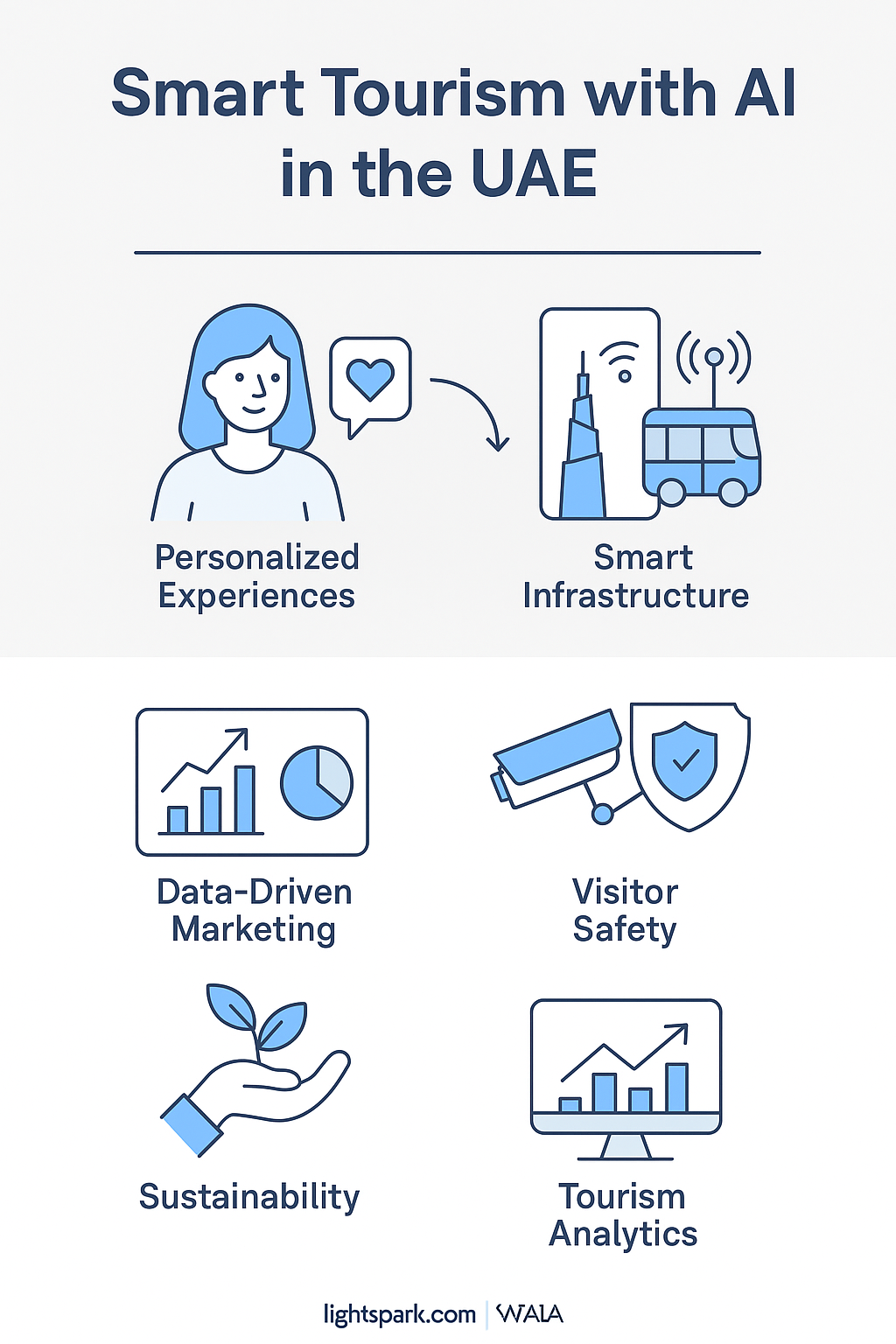
Personalisation lies at the heart of modern tourism, and AI allows that promise to become reality. AI-powered recommendation systems can transform how visitors plan their trips, creating smart itineraries tailored to individual profiles, whether family-friendly, adventure-oriented, cultural-centric or business-focused. Much like streaming services suggest films based on preferences, AI can recommend restaurants, attractions and events matched to a traveller’s interests, budget and even real-time weather conditions. Multilingual virtual assistants powered by natural-language processing can guide tourists in Arabic, English and other languages, making destinations in the UAE even more accessible. For example, an AI assistant might say: “Since you enjoyed the aquarium at Dubai Mall yesterday, you might like Yas Waterworld in Abu Dhabi tomorrow, travel time two hours, and today tickets are discounted.”
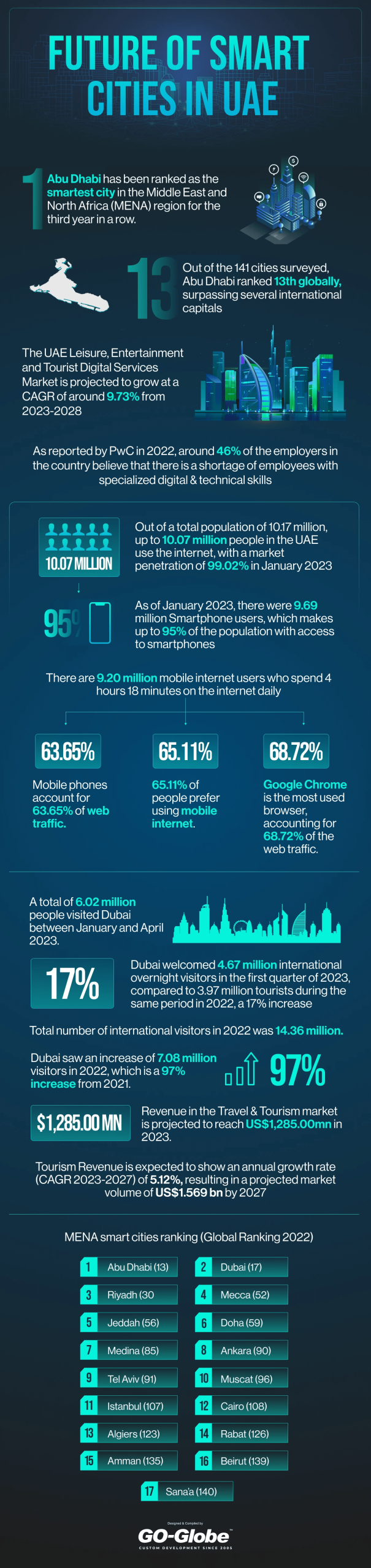
Research indicates that 68 per cent of UAE travellers now use AI when booking holidays, representing a 57 per cent increase year-on-year.
Smart Tourism Infrastructure
Managing the physical and digital infrastructure of tourism at scale demands sophisticated tools. Machine-learning systems can forecast when facilities at major attractions or airports will need maintenance, thereby minimising downtime and maximising guest satisfaction. AI-enabled crowd-management systems monitor real-time visitor flows at key sites to prevent congestion and enhance safety. Transport optimisation, powered by AI, links public transit, ride-sharing and walking routes into integrated smart mobility solutions for tourists. These innovations help deliver a smoother experience across the board, while easing pressure on infrastructure and preserving the quality of service.
Data-Driven Marketing
In a global tourism market where standing out matters, AI enables smarter marketing. Predictive analytics can study flight bookings, hotel occupancy and online search trends to anticipate which markets are likely to produce more visitors. Rather than generic campaigns, operators can deploy personalised promotions. For example, luxury shopping offers aimed at high-net-worth visitors or cultural festival packages targeted at European travellers. Sentiment-analysis tools scan social media and review platforms to gauge what global audiences are saying about the UAE, allowing marketing to adapt in near real-time.
Enhancing Security and Visitor Safety
Tourism rests on trust, and AI enhances that foundation. Facial-recognition systems already used in UAE airports speed up passport control and strengthen border security. Machine-learning models detect suspicious booking patterns or potential fraud in real time. AI-powered crisis-management systems can issue alerts about weather, traffic or health emergencies, ensuring visitors feel safe and confident. In a region where luxury merges with mass tourism, these technologies help maintain high standards of guest protection and operational reliability.
Sustainable Tourism Through AI
The UAE’s Vision 2030 places sustainability at the core of its development agenda, and tourism is no exception. AI supports eco-friendly travel through energy-efficiency monitoring in hotels and resorts, guiding tourists toward responsible activities like eco-resorts or nature-based sites, and enabling carbon footprint tracking that lets visitors offset their travel impact at the point of booking. These AI-driven capabilities help balance growth with environmental responsibility, an increasingly important factor for global travellers.
AI-Powered Tourism Analytics for Policymakers
Beyond the guest experience, AI helps the governing bodies plan smarter. Visitor-flow forecasting models predict which attractions will be busiest, enabling optimal deployment of staff and resources. Economic-impact modelling uses ML to estimate how new attractions or events affect jobs, hospitality demand and GDP. Policy-simulation systems can test different visa rules or promotional campaign scenarios and forecast outcomes. This feedback loop creates stronger planning and better results for the national tourism strategy.
Examples from the UAE
The UAE is already integrating AI into tourism in practical ways. For example, government tourism chatbots assist visitors with hotel bookings, visa information and event details. Smart-city projects in Abu Dhabi leverage AI across islands such as Saadiyat and Yas to improve visitor experience. Major airports in Dubai are among the first globally to adopt biometric boarding gates and other AI-driven infrastructure. The UAE continues to solidify its position as an innovator in tourism and hospitality.
Our Thoughts
Integrating AI and machine learning into the tourism sector is a logical next step for the UAE, a nation known for redefining possibilities and elevating the visitor experience. Personalised itineraries, predictive operations, safer travel, targeted marketing, and sustainable practices are no longer futuristic concepts; they are already influencing how tourism works. For the national tourism agencies and hospitality operators, embracing AI means attracting more diverse global visitors, managing world-class infrastructure more effectively and bolstering the UAE’s reputation as a cutting-edge destination. In many ways, AI in tourism could become the next landmark for the Emirates, as iconic as the Burj Khalifa or Palm Jumeirah.