
What Is FinTech?
FinTech, short for Financial Technology, refers to the use of digital tools, software, and innovation to make financial services faster, easier, and more accessible to everyone.
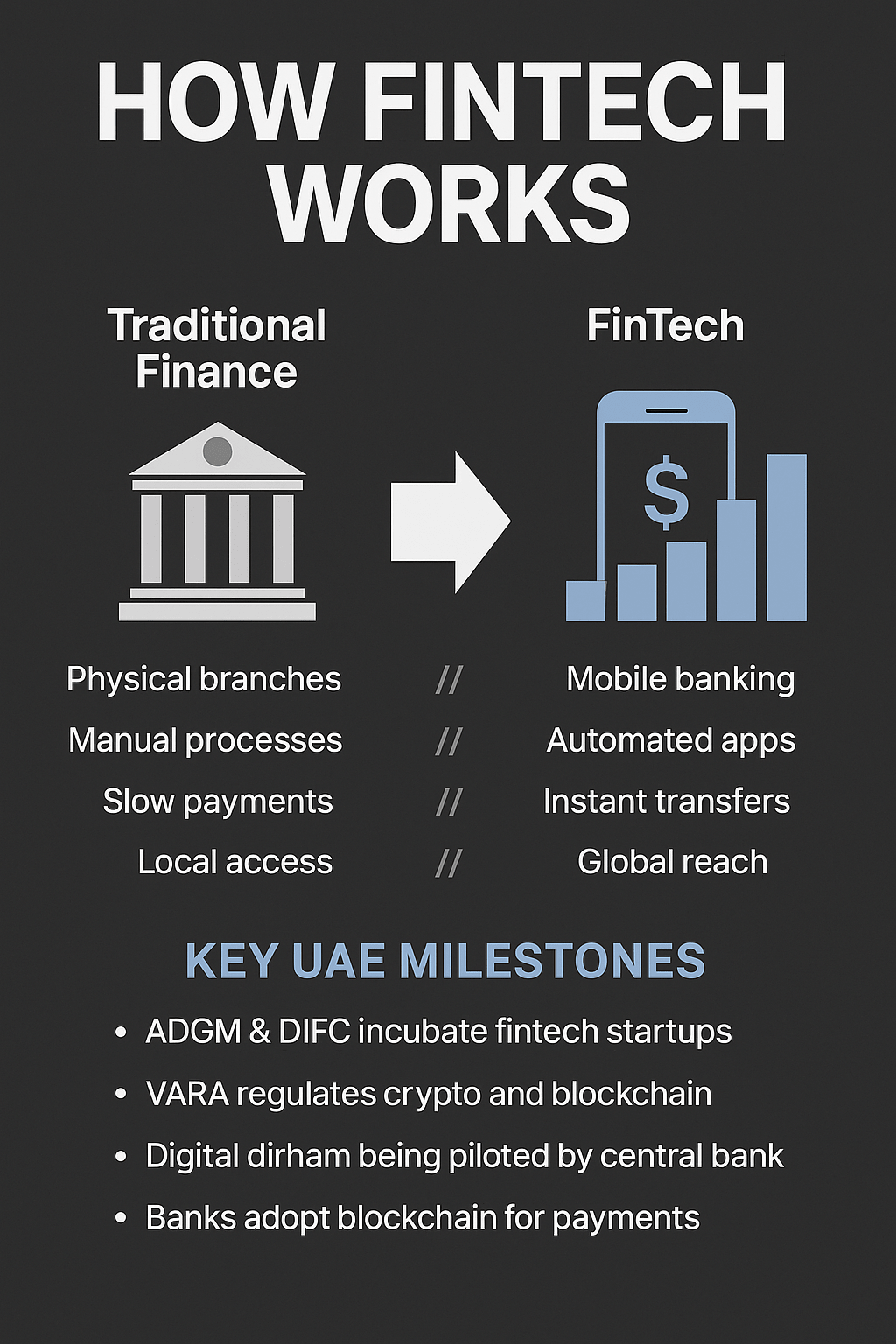
At its core, FinTech blends finance and technology to improve the way individuals and businesses manage money. Where traditional banks rely on paperwork and physical branches, FinTech platforms use mobile apps, AI, and blockchain to make financial services smarter, cheaper, and more efficient.
FinTech covers a wide range of applications, including:
- Sending and receiving money online
- Mobile banking and digital wallets (e.g., Apple Pay, PayPal)
- Online investing and trading apps
- Cryptocurrency exchanges and blockchain platforms
- Automated lending, insurance, and financial advice
In short, FinTech is reshaping how people access, move, and grow their money—bringing financial freedom to millions who were previously underserved by traditional banks.
A Simple Example of FinTech in Action
Imagine you want to send money to a friend overseas.
- Traditional finance: You visit a bank, fill out forms, wait several business days, and pay expensive transfer fees.
- FinTech solution: You open an app like Wise (formerly TransferWise) or a crypto wallet, tap a few buttons, and send money instantly with minimal fees.
This simple scenario highlights what makes FinTech revolutionary. It removes barriers, reduces costs, and makes global finance as easy as sending a text message.
Let’s explore how FinTech is transforming traditional finance and reshaping the way money moves in today’s digital world.
Faster Payments & Transfers
FinTech platforms use digital payment rails and blockchain technology to process transactions in seconds, bypassing traditional intermediaries.
Financial Inclusion
Globally, billions remain unbanked or underbanked. FinTech offers them access to payments, savings, and credit directly through a smartphone, no bank branch required.
Lower Costs
By digitizing and automating processes, FinTech companies eliminate overhead costs and pass savings directly to users through lower fees.
Transparency & Trust
Blockchain-powered systems make every transaction traceable, reducing fraud and increasing public confidence in financial systems.
Personalization Through AI
AI-driven FinTech tools can now analyze spending habits, forecast cash flow, and provide automated financial advice, helping individuals and businesses make smarter decisions.
Together, these innovations make finance faster, fairer, and more efficient—laying the foundation for a new era of digital banking.
The UAE and Its FinTech Ambitions
The United Arab Emirates has rapidly become one of the most forward-thinking FinTech hubs in the world. With progressive regulation, strategic partnerships, and strong government support, the UAE is building a next-generation financial ecosystem centered on blockchain, AI, and open banking.
Regulatory Support
- Abu Dhabi Global Market (ADGM): Operates a dedicated FinTech Lab, providing startups with a safe regulatory sandbox to test and refine innovations.
- Dubai International Financial Centre (DIFC): Hosts accelerator programs and provides streamlined licensing for FinTech and digital banking companies.
These initiatives give entrepreneurs the confidence to innovate while maintaining compliance and consumer protection.
Blockchain & Digital Assets
- VARA (Virtual Assets Regulatory Authority): Based in Dubai, VARA regulates crypto and blockchain-based FinTech operations, making the UAE one of the safest environments for Web3 innovation.
- Central Bank Initiatives: The UAE Central Bank is developing a digital dirham (CBDC) to make cross-border payments faster, more secure, and cost-efficient.
Blockchain’s integration into payments, trade finance, and asset tokenization positions the UAE as a global leader in decentralized finance (DeFi) and digital banking transformation.
Payments & Banking Innovation
UAE banks are now implementing real-time blockchain systems for trade settlements and remittances. This shift is reducing friction for global transactions and enabling instant financial connectivity between institutions and individuals.
Meanwhile, digital payment startups are capturing the retail and e-commerce market. Companies like Tabby (buy-now-pay-later) and Pyypl (borderless payments) are reshaping how consumers shop and pay.
Startups, Investment, and Global Expansion
Events such as the Dubai FinTech Summit are attracting venture capital, startups, and global brands like Stripe, Revolut, and Binance, which have all expanded into the UAE.
At the same time, local innovation hubs like DMCC Crypto Centre, Hub71, and RAK Digital Assets Oasis are supporting homegrown FinTech startups with funding, mentorship, and regulatory clarity.
Why FinTech Matters for the UAE
The UAE’s commitment to FinTech isn’t just about technology, it’s about economic diversification, global competitiveness, and financial inclusion.
As digital payments, tokenized assets, and blockchain infrastructure evolve, FinTech will play a key role in:
- Supporting smart cities and e-government services.
- Enabling Web3 and DeFi adoption across industries.
- Attracting international investors and startups to UAE free zones.
With innovation-friendly policies and world-class infrastructure, the UAE is positioning itself as the Middle East’s financial technology powerhouse.
Our thoughts
FinTech isn’t just a buzzword, it’s the foundation of the future financial system.
By merging finance with technology, it delivers speed, transparency, and inclusion in ways that traditional banking never could.
In the UAE, visionary leadership and a strong regulatory framework are creating one of the most dynamic FinTech ecosystems in the world. From blockchain-based payments to AI-powered financial platforms, the country is redefining how money moves, how businesses operate, and how innovation shapes the global economy.
FinTech in the UAE isn’t just transforming finance, it’s building the bridge to a smarter, more inclusive digital future.
Suggested Internal Links