Artificial Intelligence (AI) is no longer just a futuristic concept; it’s reshaping the healthcare industry today. From drug discovery to robotic-assisted surgery, AI is revolutionising how doctors diagnose, treat, and manage patients.
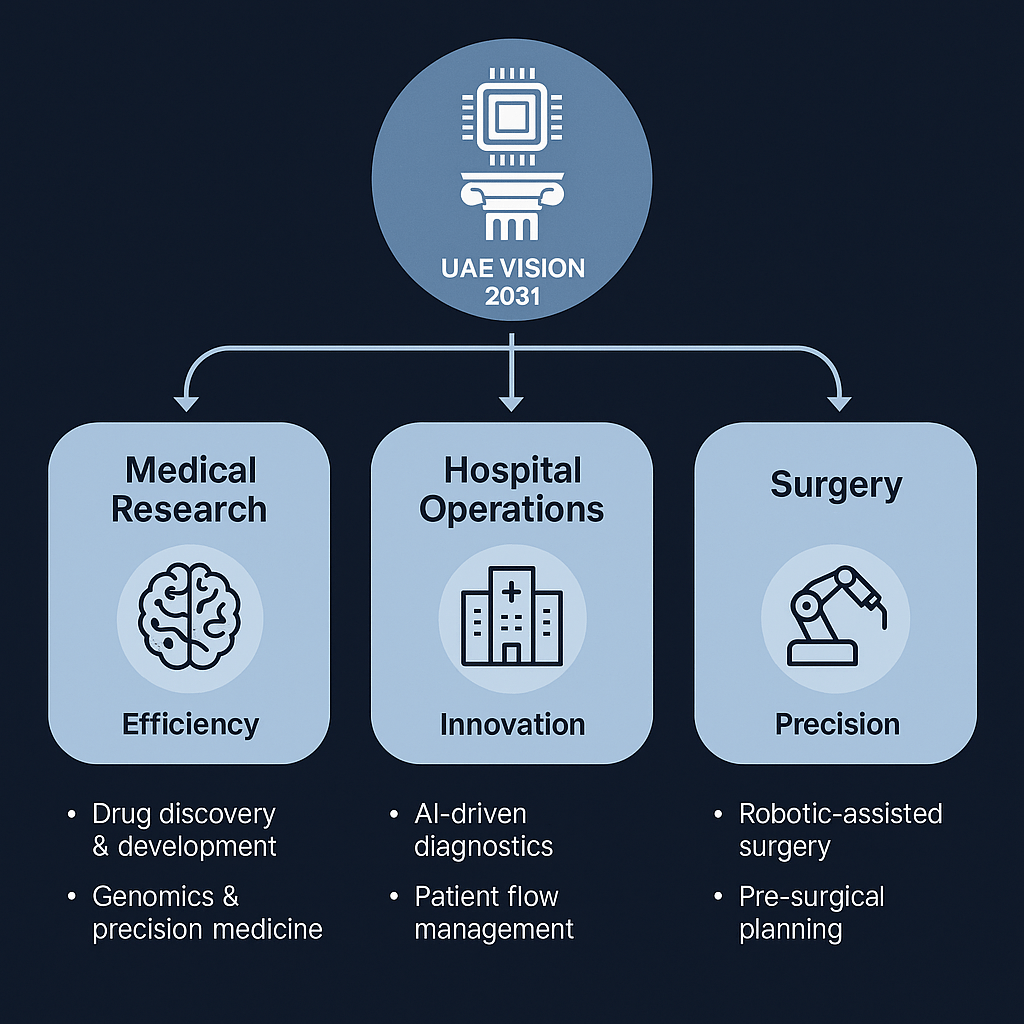
For the UAE, a country investing strategically in healthcare innovation as part of Vision 2031 and the UAE AI Strategy 2031, these advancements are helping build a world-class medical ecosystem that combines technology, precision, and care.
Why AI is Important for Medical Research
Medical research has always been data-intensive, involving complex analyses of genes, trials, and patient histories. AI is now making these processes faster, smarter, and more cost-effective, ushering in a new era of precision medicine and discovery.
Drug Discovery & Development
AI algorithms can analyse millions of molecular structures in days rather than years, predicting how they might interact with the human body.
This drastically reduces the time and cost of drug development, accelerating breakthroughs for treatments in cancer, heart disease, and neurological conditions.
Genomics & Precision Medicine
AI helps decode DNA sequences to uncover genetic predispositions to illness. This allows doctors to design personalised treatment plans, improving effectiveness while reducing side effects.
Clinical Trial Optimisation
AI models can analyse patient data to identify ideal candidates for trials and predict potential outcomes, helping reduce trial failures and costs.
Disease Prediction & Prevention
AI can detect early signs of illnesses, like cancer or cardiovascular disease, long before symptoms appear, using predictive analytics on medical records, wearable data, and imaging scans.
What is the potential impact on the UAE?
With growing biotech clusters in Abu Dhabi (Hub71, ADGM) and Dubai Healthcare City, the UAE is positioning itself as the regional leader in AI-driven medical research, attracting global investment, scientists, and pharmaceutical partnerships.
AI in Hospital Operations and Management
AI isn’t just changing how we treat disease; it’s transforming how hospitals and clinics operate behind the scenes.
Let’s look at some potential use-cases:
Patient Flow Management
AI can predict admission rates, optimise bed allocation, and reduce waiting times, helping hospitals deliver smoother patient experiences.
AI-Powered Diagnostics
Tools like Google’s DeepMind can read X-rays, MRIs, and CT scans with near-human accuracy, detecting patterns that even experienced radiologists might miss.
Virtual Health Assistants
AI chatbots and voice assistants handle appointment bookings, patient reminders, and post-consultation follow-ups, reducing the administrative load on staff.
Predictive Resource Allocation
Machine learning models forecast demand for medications, staff, or ICU beds, helping hospitals plan better during peak demand or emergencies.
Examples in the UAE:
Hospitals such as Cleveland Clinic Abu Dhabi and Mediclinic Middle East are piloting AI systems for diagnostics and operations, ensuring that healthcare delivery remains efficient, personalised, and scalable.
By embracing AI-driven management systems, the UAE can maintain world-class healthcare standards while preparing for future population growth and medical tourism demand.
AI in Surgery and Clinical Practice
Perhaps the most transformative use of AI in healthcare is inside the operating room. AI is helping surgeons perform complex procedures with unmatched precision and confidence.
Robotic-Assisted Surgery
AI-powered systems like the da Vinci Surgical Robot assist surgeons in performing delicate operations with microscopic accuracy, reducing complications and speeding recovery times.
Real-Time Decision Support
During surgeries, AI can analyse live patient data—such as heart rate, oxygen levels, and blood flow—to guide surgeons with data-backed insights.
Pre-Surgical Planning
AI can create 3D digital simulations of patients’ anatomy, helping doctors practice and perfect their techniques before entering the operating room.
Post-Surgery Monitoring
AI-integrated wearables monitor recovery metrics and alert doctors to complications early, ensuring safer and faster patient recovery.
Impact for the UAE:
Dubai’s robotic surgery initiatives and the integration of AI tools in government hospitals demonstrate the UAE’s leadership in next-generation clinical care. These programs align perfectly with the nation’s ambition to be a global hub for medical excellence and innovation.
The Bigger Picture: AI’s Role in the UAE’s Healthcare Future
AI isn’t just about technology; it’s about building smarter, faster, and more inclusive healthcare systems.
For the UAE, the adoption of AI in healthcare supports its broader national goals:
- Accelerating medical research in genomics, pharmaceuticals, and clinical trials.
- Improving operational efficiency across hospitals and clinics.
- Enhancing surgical precision through robotic assistance.
- Optimising resource use for sustainability and cost-effectiveness.
- Expanding medical tourism by offering world-class, tech-driven healthcare.
With Dubai Healthcare City, Mubadala Health, and cutting-edge initiatives from AI71 and MBZUAI, the UAE is not just adopting AI; it’s defining the global blueprint for AI-integrated healthcare ecosystems.
Our thoughts
AI is transforming medicine from every angle. From speeding up research, improving diagnostics, enhancing surgeries, and making healthcare more accessible.
For the UAE, this transformation is both strategic and visionary. By investing in AI-driven hospitals, biotech hubs, and smart research frameworks, the country is paving the way for faster cures, safer surgeries, and smarter healthcare systems.
AI is not replacing doctors; it’s empowering them with insights, precision, and predictive intelligence. And as the UAE continues to invest in this frontier, it stands poised to become a global leader in AI-powered healthcare innovation.