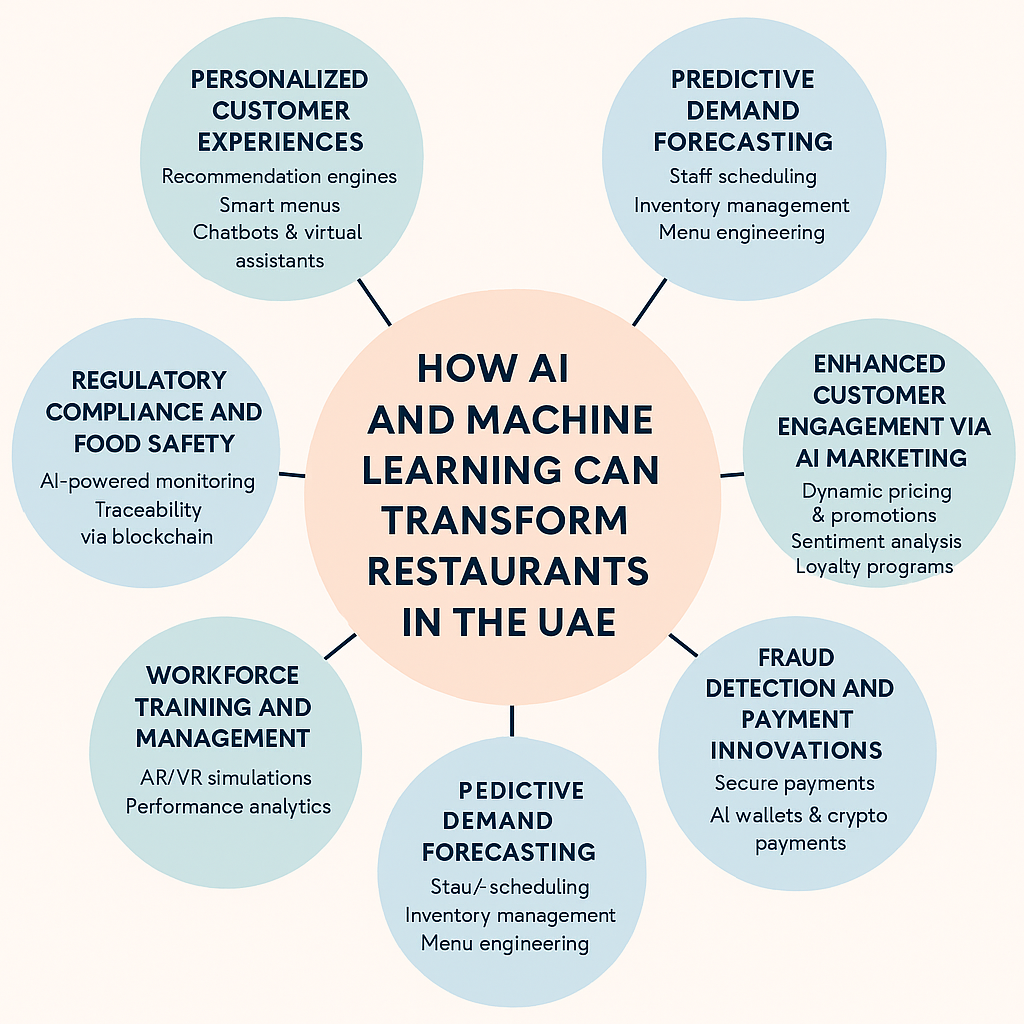

Personalised Customer Experiences
In a market as diverse as the UAE, personalisation is no longer a nice-to-have; it is becoming a necessity. AI enables restaurants to learn from customer behaviour and offer highly tailored experiences. Recommendation engines can analyse past orders, dietary preferences or even seasonal weather changes to suggest dishes that resonate with the individual guest. Digital menus can adapt in real time, promoting lighter, chilled options on a hot day in Dubai or showcasing special festive dishes during Ramadan. Chatbots and virtual assistants operating in English and Arabic can take reservations, answer questions or upsell menu items around the clock. For a country with more than 200 nationalities represented in its population, the ability to cater to varied cultural and dietary needs, from halal, vegan, and keto, is a powerful brand differentiator.
Predictive Demand Forecasting
Machine-learning models bring a strategic dimension to operations by analysing sales data, seasons, weather and even major local events (for example, an F1 weekend in Abu Dhabi) in order to forecast customer demand. This ability allows restaurants to schedule staff smarter, avoiding over-staffing on slower weekdays and shoring up resources ahead of busy periods. Inventory management becomes more accurate, reducing food waste and ensuring top-selling ingredients are available. Menu engineering benefits as well, with AI spotting which items consistently perform and suggesting pricing or promotional adjustments accordingly. In the UAE, food waste remains a significant concern and aligning operations with sustainability goals, such as the nation’s Food Waste Pledge, adds both ethical and financial advantages.
Smart Kitchen Operations
Behind every memorable dining experience lies a complex operational engine, and AI tools are increasingly part of that engine. Internet-of-Things-enabled equipment, such as smart ovens, refrigerators or fryers, can predict maintenance needs before breakdowns occur. Automated cooking assistants and robotic systems can handle repetitive tasks, from flipping burgers, frying sides, mixing sauces, freeing chefs to focus on creativity and guest-facing service. Machine learning can analyse patterns of energy consumption and optimise usage of lighting, cooling and appliances, vital in the UAE, where energy costs are significant. The result is a leaner, more reliable operation that supports higher service quality.
Enhanced Customer Engagement via AI Marketing
In a landscape where diners are bombarded with choices, restaurants must make their marketing smarter. AI-driven insights enable highly targeted campaigns. Dynamic pricing and promotions can adjust in real-time based on demand patterns, time of day or location (for instance, offering lunch discounts to office crowds in Dubai’s financial district). Sentiment analysis tools scan reviews, social media and rating platforms to identify guest perceptions and enable rapid response if issues arise. Loyalty programmes powered by machine-learning track behaviour and deliver personalised rewards, helping convert one-time visitors into regulars.
Fraud Detection and Payment Innovations
As the UAE continues to embrace digital payments and blockchain initiatives, restaurants can benefit from AI-enabled safeguards. Secure payment systems use AI to detect unusual transactions and reduce fraud risk, especially for high-volume chains. AI wallets and crypto-payment options are increasingly feasible as Dubai advances its blockchain adoption strategy. These tools not only improve security but also position restaurants as innovative, future-ready operations.
Delivery and Logistics Optimization
The UAE’s food-delivery sector is booming, and AI plays a key role in making it efficient. AI algorithms optimise delivery routes to minimise delays and fuel consumption. Order batching groups multiple drop-offs into one journey efficiently. Looking further ahead, drone and robot delivery systems, already being trialled in Dubai, will rely on AI coordination to ensure safe and effective autonomous delivery networks. These technologies help restaurants scale delivery operations without proportionate increases in cost or complexity.
Workforce Training and Management
Training and managing staff in a fast-moving hospitality environment can be challenging, but AI offers new solutions. Augmented- and virtual-reality simulations give staff risk-free environments to learn customer service techniques, food safety protocols or kitchen operations. Performance analytics track service times, upsell success and guest satisfaction, enabling targeted coaching and reward programmes. This shift helps elevate service standards consistently across multiple outlets.
Regulatory Compliance and Food Safety
In the UAE, regulatory demands around health, halal certification, and food safety are strict and non-negotiable. AI-powered monitoring systems using sensors can track food temperatures, hygiene standards and equipment performance, alerting staff immediately if standards fall. Traceability solutions, assisted by AI and sometimes blockchain, allow restaurants to provide transparent sourcing data, a valuable trust builder for conscious consumers.
Why the UAE is the Perfect Testbed for AI in Restaurants
The UAE’s smart-city ambitions, advanced infrastructure and global hospitality positioning make it ideally suited for AI innovation within restaurants. The national AI Strategy 2031 reflects a government vision for the integration of AI across sectors. Tech infrastructure in Dubai and Abu Dhabi supports rapid development and deployment. The multicultural market provides rich customer data for AI systems to learn and adapt. Finally, long-haul tourism and global brand presence mean restaurants cannot afford to lag; they must adapt quickly or be overtaken.
Our Thoughts
Artificial intelligence and machine learning are not distant futuristic concepts for the restaurant business in the UAE; they are already essential tools for staying competitive, reducing costs and creating memorable customer experiences. From AI-powered menus and predictive forecasting to smart kitchens and blockchain-backed payments, the opportunities are vast. In a market as dynamic and forward-thinking as the UAE, restaurants that embrace AI will not just survive, they will lead and help set global benchmarks for dining in the future.