What Is RWA in Real Estate?
In the context of real estate, RWA means that a physical asset, say a luxury apartment in Dubai or a commercial property in London, is converted into digital form. Each token issued on a blockchain represents a portion of that asset, enabling far more flexible and inclusive investment structures. For example, a property valued at ten million dollars might be split into one million tokens at ten dollars each. The key innovation is that ownership, revenue streams and trading peer-to-peer become possible for assets previously restricted to large investors.
How Does Real Estate Tokenization Work?
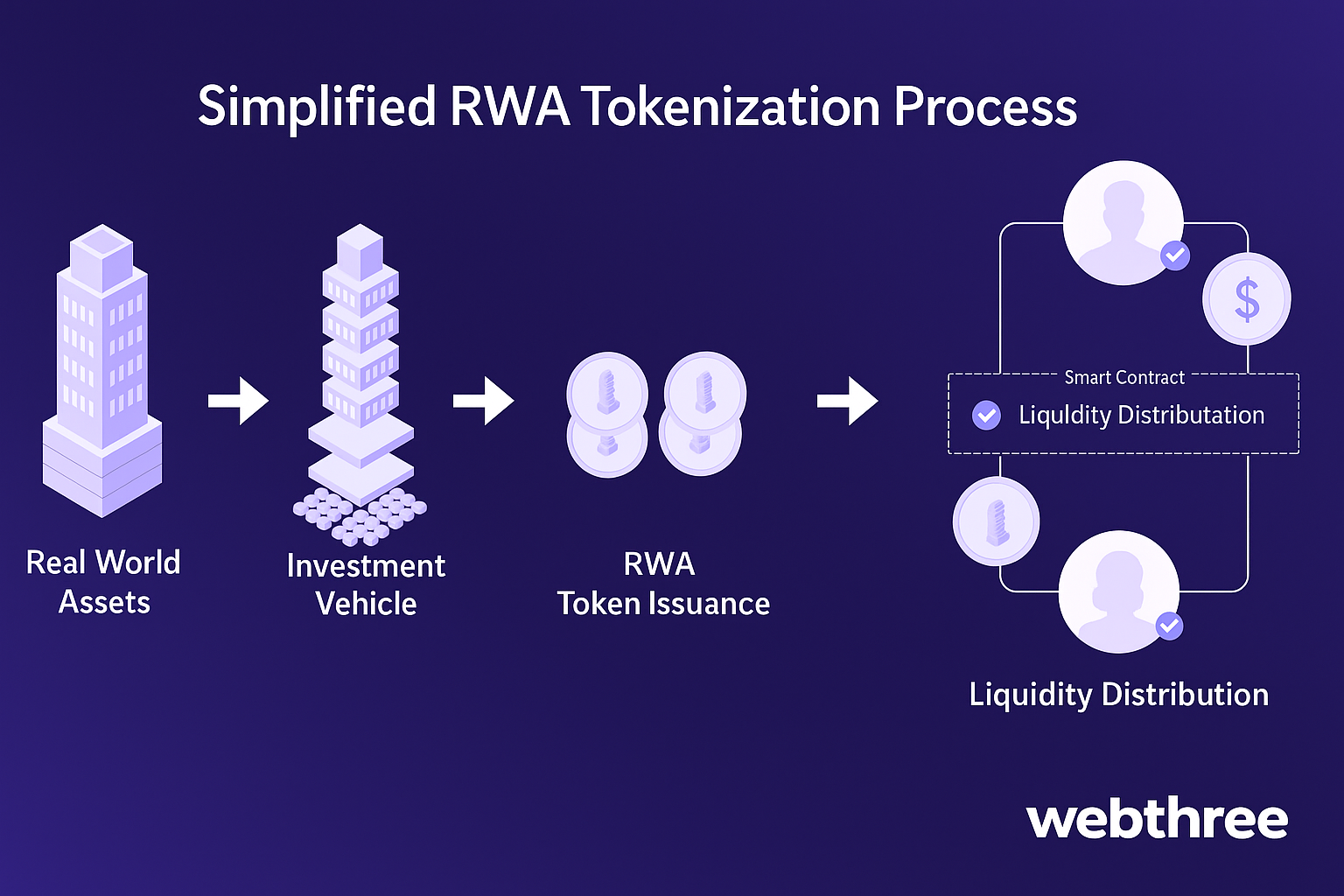
The process of tokenizing real estate typically follows several critical steps to ensure legal validity and compliance with regulations. First, asset selection and valuation: the property is identified and appraised. Next, legal structuring ensures the asset is placed into a legal entity, such as a special purpose vehicle (SPV) or trust, so that token holders hold a documented claim. Then comes token creation on the blockchain, converting ownership rights into digital tokens. Following that, investor distribution occurs via regulated platforms where investors can buy tokens like they would shares. Once issued, these tokens may be traded on secondary markets, offering liquidity far beyond traditional property markets. Finally, management and yield: token holders may receive income generated by the property, such as rental revenue or future sale profits. Smart contracts automate these processes, reducing intermediaries, lowering costs and improving transparency.
Why RWA Tokenization Is Growing in Real Estate
Tokenization brings several compelling advantages. First is accessibility: investing in real estate no longer demands large capital commitments; fractional ownership lowers the threshold and invites retail investors globally. Second is liquidity: real estate has traditionally been illiquid, with sales taking months; tokenized assets can be traded quickly, often in minutes or hours. Third is efficiency and cost reduction: smart contracts automate crucial functions, reduce reliance on brokers, and shorten settlement times. Fourth is transparency and security: blockchain creates immutable records of ownership, enhancing trust and reducing fraud risk. Fifth is global reach: an investor in the UAE could own a fraction of an apartment in New York while someone in Europe might hold a share of a Dubai villa. This borderless potential makes real estate truly international.
How Tokenized Real Estate Compares to Traditional Real Estate
Feature | Traditional Real Estate | Tokenized Real Estate (RWA) |
Minimum Investment | High – large capital required | Low – fractional ownership available |
Liquidity | Very low – difficult to sell quickly | Higher – tokens can often trade 24/7 |
Ownership Records | Paper-based and often complex | On-chain, transparent and tamper-proof |
Transaction Speed | Weeks or months | Minutes to hours |
Fees | Multiple intermediaries (agents, banks) | Reduced via smart contracts |
Global Access | Usually, local investors only | Borderless – anyone with internet access |
Income Distribution | Manual via property managers | Automated via blockchain smart contracts |
Why Investors Are Turning to Tokenized Real Estate
Investors are increasingly excited about tokenized real estate because it enables diversification. They can spread smaller amounts across multiple properties and geographies, reducing concentration risk. Yield opportunities become more flexible and accessible. Tokenized real estate combines the stability of tangible assets with the agility of blockchain systems. Innovation becomes a differentiator for forward-thinking portfolios.
Challenges and Considerations
Despite the promise, tokenized real estate still faces several hurdles. Regulation remains uneven: jurisdictions must establish clear frameworks for RWA ownership and trading. Traditional investors may be slow to embrace blockchain-based property markets. Custodianship is complex: ensuring tokens truly represent legal ownership remains non-trivial. Secondary markets for tokens may be volatile, and liquidity can be limited in practice. Investors should understand these complexities before participating.
Summary – Why Tokenized Real Estate Is the Future
Real estate has long been one of the safest and most profitable asset classes. However, it has historically been slow, expensive and inaccessible to all but the wealthiest. Tokenization addresses each of these barriers: it makes property investment faster, cheaper and accessible to a global audience. As platforms in hubs such as Dubai, Singapore and the US expand their RWA real estate solutions, tokenization is poised to become the new standard. The UAE, in particular, is positioning itself as a global leader in tokenized real estate, underpinned by regulatory clarity, innovation hubs and international partnerships.